The Aging Down of Women

As a photographer, there is a certain “code of conduct” to follow when posing models. You don’t touch the model without their permission, you try to keep them as comfortable and safe as possible, and you never ever blame them for a bad photo. You are the artist and they are essentially your canvas and brush, so you have to be respectful of their willingness to help you create your vision.

After watching Codes of Gender: Identity and Performance in Pop Culture, I had my eyes opened to the concept of the aging down of women in advertisements and in the modelling industry. Women are typically posed passively, and this is done to enlongate and excentuate certain features like the neck, arms, and legs. But there are other more subliminal messages we try to portay through the model to express femininity: innocence, youth, and sexuality. Not there is anything wrong with any of these things, but I realized that mixing those things can be really detrimental to the way people precieve women, and more importantly young girls.

When we mix the idea of child-like innocence with female sexuality, we get what we call “lolita”. Lolita is a book by Vladamir Nobakov about a man named Humbert Humbert, who is sexually attracted to young girls, specifically Dolores “Lo” Haze, the daughter of the women he is dating for most of the book. Humbert called Dolores his “Lolita, light of of my life, fire of my loins”, and from this quote birthed a normalized culture of sexualizing the mannerism and clothes of young girls. Which is the exact opposite of what the author intended to come from this book.

We warped the idea of innocence being attractive into a way to sexualize young girls without even realizing. And all it does is cater to pedolphiles and delegitimized womanhood.

Hashtag Activism and Why We Need It

If you didn’t already know, we are in the digital age of communication. In the last 40 years we’ve seen rapid advancements in they way we communicate, particularly through means of social media and hashtags. “Hashtag activism” is a product of social media, specifically Twitter, coined by news outlets to decribe the use of hashtags to call attention to particular political issues. Although it gets a pretty bad rep for not being “real activism”, we’ve seen time and time again that it is essential in our fight for getting accountability and awareness.

I’m sure you all remember the tragic story of Trayvon Martin. On the evening of February 26th, 2012, Trayvon Martin was chased and then shot and killed less than 100 yards from his father’s home by a local neighborhood watch memeber. Trayvon had no criminal record, was not engaged in criminal activity, had no intentions of participating in crimincal activity, and was racially profiled. He was on his way back to his father’s house after buying skittles at a local 7-11. The police arrested Trayvon’s shooter, who was later released with no charges against him. Trayvon’s father didn’t even learn what had happened to his son until after filing a missing person’s report to the Miami-Dade Police Department.

The only reason any of us know about this is because Trayvon’s family started a Change.org page calling for signature in support of the arrest of their son’s murderer. Paired with the ability to share the campaign on Facebook, the campaign got over two million signatures, becoming a national story. After the acquittal of Trayvon’s killer, you see the birth of #BlackLivesMatter.

We are now in 2019, and Black Lives Matter in a full blown movement, hashtags and all. Hashtags are a documentation of our lives, our history, and it’s not an overstatement to say that they are incredibly powerful tools in the fight for equality. In a journal written by Yarimar Bonilla and Johnathan Rosa called #Ferguson they used the example of Nigerian American novelist Teju Cole’s encouragement of #TheTimeOfTheGame on Twitter during the 2014 World Cup. These tweets were coming from people from different timezones all over the world, and with the use of that hashtag, millions of people were in the same moment.

And that’s the beauty of hashtags and hashtag activism.

Out of Context: Is it Still Racist?

Any Pokemon fans out there? If so, you’re probably familiar with the Human Shape ice-type pokemon, Jynx. Jynx is a part of the first generation of pocket monsters to hit the market in the 90’s, and, for reasons I am about to share and explain, was not very popular in the Western market for it’s original design.

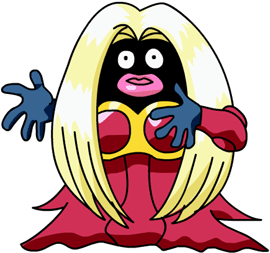
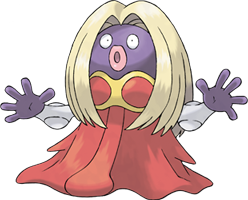
On the left is Jynx’s original design, and on the right her updated design after some pretty well-needed controversy.

If it isn’t obvious what might have rubbed Americans the wrong way about this design, I’ll just say it: Jynx really looked like a Jim Crow-era African American caricature. So let’s get to the bottom of this, I’ll give you a little bit of context for her design:

Aside from Nintendo 64 having a limited color palette, Jynx’s dark complexion (and overall design) is thought to originally be inspired by the Japanese mythical creatures Yama-uba, a white-haired hag who lives in the mountains and wears a tattered kimono with, dark frost-bitten skin, and the Yuki-onna, a young, blue-lipped, icey ghost woman who lured men to their deaths. These claims have never been comfirmed by Nintendo, but after a bit of Googling, I kind of buy it? I won’t deny the similarities between Jynx and these Japanese ghosts. So, for the sake of moving foward, let’s assume Nintendo meant no harm and that in Japan, where the game first released, this pokemon was very well recieved because of it’s cultural connections.

Despite their good intensions, Nintendo got called out big time by African-American author Carole Boston Weatherford shortly after the first Pokemon movie came out in 1998. She described Jynx as a “overweight drag queen incarnation of Little Black Sambo, a racist stereotype from a children’s book long ago purged from libraries.”

Yikes…

So obviously they had to redesign Jynx, and it was the simple switch from black to purple that did the trick.

But. Is it still racist?

Well, maybe not. But that doesn’t excuse it, not even a little. Even if the design was not intended to be racist, it was still deeply offensive. What is and is not offensive is COMPLETELY subjective, because there is a certain context that’s needed; at the end of the day, we humans give everything in our world meaning. The legendary steel Pokemon Registeel was given a different pose for the European releases of Pokemon Diamond and Pokemon Pearl because the original pose eerily resembled a Nazi salute, and all Nazi imagery is illegal in Germany. That’s something totally specific to Germany, completely subjective. So, don’t let the “we give words meaning” logic trick you into thinking you can say and do anything you want. Just because something wasn’t intended to be offensive doesn’t mean that it isn’t offensive. That’s just not how it works, ever.

 And it’s not something specific to racism either, we find it in little things we do in our own culture. Do you swear in front of your parents the same way you swear in front of your friends? Do you swear in front of your grandparents the same way you swear in front of your friends? Do you call people who are older than you Ms. or Mr.? If so, you have taken part in tiny “political correctedness” that can change depending on the context of your relationship with that person, i.e. basic respect and consideration of other people. Swearing in front of you mother isn’t going to hurt anyone, obviously, but your mother calling you out for it doesn’t make her a snowflake, she’s just trying to keep you polite.

The bottomline is, if you wouldn’t say fuck in front of you mom, you also shouldn’t say something that can be precieved as racist, and hope that if you ever say or do something offensive, in general, that someone corrects you.

A Brief Analysis on the Color-coding of Terror

Depending on where you look, the definition of a mass shooting is either two or more or four or more victims killed or injured (aside from the shooter). A Google search will tell you a terrorist is a person who uses unlawful violence and intimidation, especially against civilians, in the pursuit of political aims (although other sources say that the motive does not always need to be political to be an act of terror), and that domestic terrorism is the committing of terrorist acts in the perpetrator’s own country against their fellow citizens.

So let’s play a game.

Which of these men is a domestic terrorist who demonstrated a mass shooting?

Omar Mateen, responsible for the Pulse night club shooting in Orlando, Florida, 2016
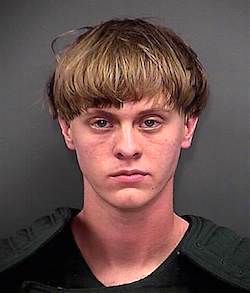
Dylann Roof, responsible for the Charleston church shooting in Columbia, South Carolina, 2015

Trick question! Omar Mateen and Dylann Roof, by definition, are both domestic terrorists who demonstrated a mass shooting. Both are Americans, both were driven by hatred, and killed in the name of that hatred. So why is the way we rememeber their crimes against humanity so different?

Omar Mateen’s affiliation with ISIS was made explicitly clear in an article by CNN, and because of these affilliations we easily call Omar Mateen a terroist, domestic or otherwise. But after a couple days of researching, I can’t find a single article or archival source that labels Dylann Roof as a domestic terrorist, only “mass shooter and white supremacist”. This isn’t to say the those titles hold less weight than “domestic terrorist”, but when you notice that white men are never called terrorist, you being to wonder if white men can even be terrorists. If you ever found yourself wondering this, the answer is yes, they can be.

The word terrorism has evolved since it’s coinage during the Reign of Terror, a period of time when the government, actually, was putting people to death during the French Revolution, but there is no question that it still evokes imagery of death and fear. In the 1920’s, during the Al Capone era of gangsters, newspapers actually used terror and terrorism as a way to describe gangsters, despite their motives not being political.

Before Dylan Roof was even identified as the shooter, Police Chief Gregory Mullen is quoted saying that the shooting at the Emanuel African Methodist Episcopal Church was a hate crime, and we know for a fact that Roof had intentions of starting a race war when he atacked the church, yet it’s hard for the nation to swallow the idea of a white domestic terrorist. Omar Mateen and Dylann Roof were both fueled by fierce hatred and had political motives, and yet only one of these malicious men gets “domestic terroist” in the first line of their wiki page.

Since the year 2000 there have been over 200 schools shootings in the United States; that includes primary, secondary, high school, and universities. Since the year 2009 there have been nearly 200 mass shootings, including over 30 highly publicized mass shootings.I’m still going through the list of names, but from 2009 to 2012 I cannot find another person who is labeled as a terrorist, domestic or otherwise, when you search their name.

Stay tuned, as I will update this as I find new information.

Update:

Tyler Peterson, then 20-year-old Sherrif’s Deputy, motives not political and so not a terrorist by definition. I encourage you to read the article on his crimes and see how detailed it gets about his life in contrast to the CNN story on Omar Mateen.

What it Means to Be a BoyBand

I invite you to picture a boy band.

What do they look like? Are they simply a group of boys in a band? Are they handsome, like The Beach Boys? Do they have gorgeous hair and British accents, like The Beatles? How many boys are in the band? 4? 5? How many is too many? Are they like the Beastie Boys or ‘N Sync, with crowds of girls outside their tour bus, flooding their concerts? Did they get famous overnight? Is there a fan favorite, like Paul McCartney or Harry Styles? Are their lyrics romantic, their voices angelic, like Boyz II Men? Would bitter young men call them gay? Would adults dismiss their musical talents because their main audience was young girls? Would they like that you called them a boy band?

What if I told you that there is a boy band that didn’t look anything like the boy band you just pictured? That there is a self-made, all-American boyband comprised of 13 young men of various races, who sing and rap, tell stories in their music and interact closely with their fanbase taking the world by storm. Oh, and some of them are actually gay, so move over.

If you don’t know who I’m talking about, I’d like to introduce you to the hip-hop anti-collective and musical powerhouse that is Brockhampton.

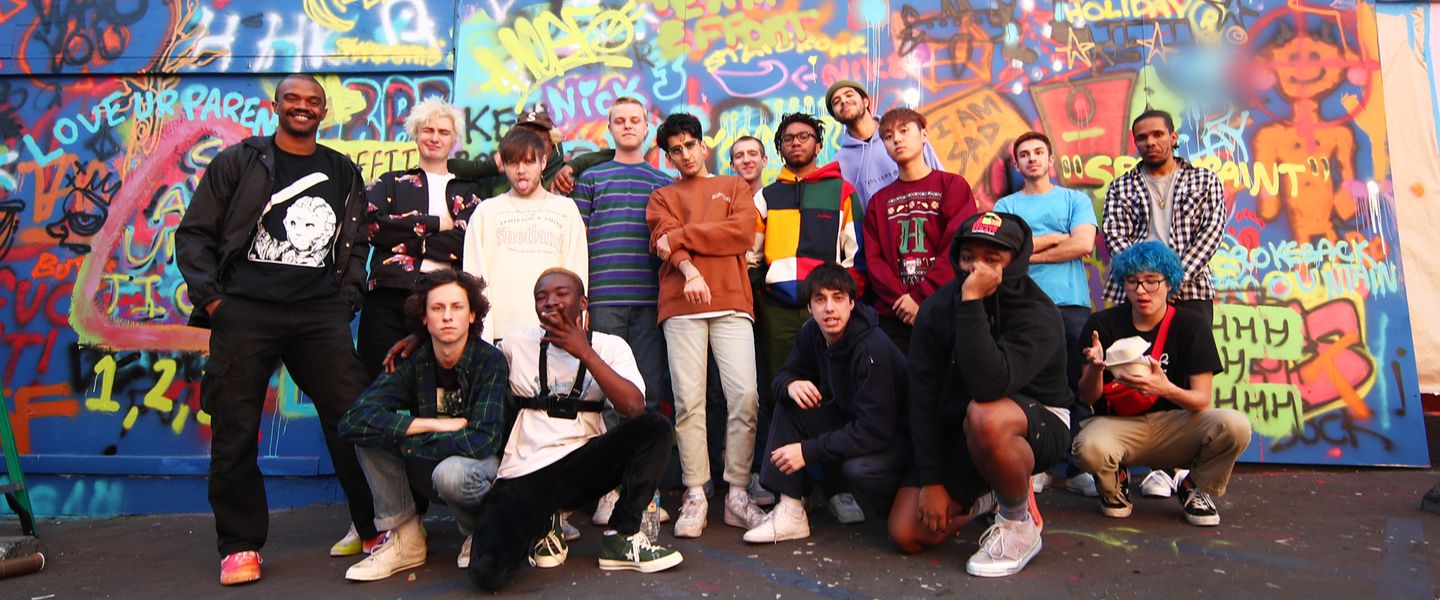
(This is an old photo of the original lineup when they frst started, so not all these members are in the band anymore. Specifically, Ameer Van, featured on the very far left, is no long in the band. Because I will not be focusing on that in my post, click the embedded “don’t tolerate sex scandels” link further down to find out more.)

Brockhampton is the biggest band you’ve never heard of and brain child of Kevin Abstract, the lead vocalist and founding member. In the vocal line up there is Kevin, Matt Champion, Merlyn Wood, Dom McLennon, JOBA, and bearface. Romil Hemnani and Q3 (Jabari Manwa and Kiko Merley) make up their production team and are occasionally on tracks. Henock “HK” Sileshi is the graphic designer and does creative direction with Kevin. Robert “Roberto” Ontenient is the web designer and does the skit vocals in Spanish for a number of songs in recent albums, Jon Nunes is the manager, and Ashlan Grey, the photographer. Phew, what a mouthful.

That’s a lot to remember, I know, but it’s important considering they are each a member of the band. And when you consider what that means for the future of boy bands, it’s worth keeping up with.

Traditionally, boy band is a bad word. Boy bands were for little girls to scream and dream about and young women to lose their minds over. Boy bands were manuafacted by labels to sell, sell, sell to the “teenybopper” subgroup of young teens. Boy bands were meant to be undercut by adults and men, dismissed because of their young, female fanbases. But what happens when the boy band, the boyband, declares themselves a boyband? Well, first of all, it no longer becomes a weapon of dismissal.

Secondly, it forces us to reconsider what it means to be a boy band.

Brockhampton began their journey in 2015 and fall into the alternative hip-hop/R&B genre, much unlike boy bands from the early 90s and 2000s. They don’t market themselves to young girls with sappy and superficial lyrics, but are story tellers, singing and rapping about their experiences as gay men, as men of color, and as men with mental illnesses. And they don’t tolerate sex scandels.

That’s not to say they don’t have things in common with classic boy bands. Each vocalist has certain trope they seem to be assigned (the little brother, the goofball, the strong and silent, etc.), and fans do have favorites. But the main difference between Brockhampton and boy bands like ‘N Sync and the Beastie Boys is that they aren’t explicitly targeting young girls with their music. There is no special grooming the members go through or a catering to young female audiences, no adoring looks into the camera or sappy lyrics on young love. They aren’t trying to create an illusion of singing to the audience, but are singing for them. Brockhampton shares their experiences of coming out, loving men, growing up with mental illness, growing up as a minority and being told they weren’t going to make it, and the reason fans fall in love with the music is because they can connect with those stories in a personal level. They’re relatable, real, and ultimately groudbreaking, and being a boyband will not take that away from them.

Barney Stinson: The Real Housewife of New York City

Upon reading The Rich Bitch by Michael J. Lee & Leigh Moscowitz (a few times), I got to wondering if there was a rich, crass, hypersexual, frivolous male counterpart to the shows like RHW and Keeping Up With The Kardashians, and how our society might perceive that man. I tried looking into The Real Househusbands, but the top searches were comedic spin-offs of the RHW: Real Househusbands Hollywood, a comedy on BET with Kevin Hart, Nick Cannon, Duane Martin, and other comedians; and Real Househusbands Philadelphia, a comedy that can be found on YouTube with comedians Tommy Pope, Tim Butterly, and John McKeever. Neither of these are in any way trying to convince viewers that what they are seeing is any form of reality, but are still more relevant that RHH Atlanta, so I didn’t even bother trying to do that compare and contrast.

As far as I could tell, there were no male reality stars that could compete with the popularity and energy of the heiresses and countesses of the Real Housewives empire. So, after about 4 minutes of racking through my incredibly short tv-series history, I could only really come up with one character:

Barney Stinson, of How I Met Your Mother.

Now, you may be wondering, how on earth could I compare Barney, the most legendary bro to have graced American television, to the rich and powerful not-really-housewives all over the country? I beg you to entertain me for just a moment. Aside from being fictitious in nature, Barney Stinson and female reality stars both:

  1. Have obscene amounts of money at their disposal.
  2. Ambiguous jobs that make them that obscene amount of money.
  3. Are obsessed with youth and looking good (Barney owns nearly 300 suits, and is known to go all out for parties/birthdays for himself and his friends).
  4. Talk about the opposite sex as if they are conquests (although Barney isn’t as explicit. But he does lie to women incredibly often in order to sleep with them, so it’s just as bad in my opinion.)
  5. Have not always been the best kind of friend.
  6. Get into crazy situations for the sake of making memories/being “legendary” (this circles back to the obsession with youth).
  7. Aren’t housewives, but “businessmen/women” (whatever that means).

Now that you’ve humored me for a bit, I’ll start explaining why I think people enjoy Barney’s character.

Although Barney and the women of reality television have so much in common, they do have one major difference that I would also like to address: irony. According to Lee & Moscowitz, Bravo utilizes the “wink”, which invites the audience to, essentially, laugh at the cast of its hit series The Real Housewives. The show is edited in such a way that viewers are “let in on the fun” of these women’s problematic lives. The star of the show says they’ll do one thing, then in the next cut we’re shown them doing the exact opposite. You see similar techniques in shows like Keeping up with the Kardashians, The Bachellorette, etc.

The very premise of shows reality shows, specifically those centered around older, wealthy women, is to give all us common-folk a chance to say “I may not be rich, but at least I’m not crazy”. Reality TV, like most television, allows viewers to become the heroes of their own lives, but this time it’s at the expense of actual people. Millions of people are invited to watch groups of grown women, who perceive themselves as the epitome of class and status, make complete fools of themselves on national television. These women cry over trivial things, sleep with their friend’s exes, prowl on younger men, are the worst part of consumer culture and capitalism, and, for a moment, the viewers are better than those women.

But then we see Barney Stinson. His frivolous, ambiguous, and problematic nature is dramatic, of course, but we aren’t invited to shame or ridicule his character the way we are in reality tv shows. We take a light-hearted approach to a male character who is no better than those women in a lot of ways, but we scrutinize reality-show women casually and on a regular basis. Many would say Barney Stinson is living the dream: he’s flithy rich, has plenty of friends to go out drinking with, has a lot of sex, isn’t married, and has no children. He’s the perfect “bro”.

Reality tv is written in such a way to make viewers ridicule and dismiss the cast, and knowing that the most popular shows focus on women is a bit telling. The only reason we don’t hate Barney Stinson is because he wasn’t written to be hated, and the women of reality tv are.
Okay Ladies, Now Let’s Talk About “Lemonade”

It’s been a little over three years since Queen Bey released her record-breaking album Lemonade, and, whether it’s raves or rages, we are still talking about it. In short, Lemonade tells the story of a bad marriage, assumed to be Beyoncé and Jay-Z’s but never confirmed, and expresses all the emotions that go into addressing infidelity and recovering from it. But aside from the rumored cheating of Jay-Z, the stunning hour-long music video, the recording-shattering amount of downloads and the fact that all 12 songs were on the Hot 100 list, the most controversial, headline-grabbing aspect of this album’s release was that Beyoncé seemed to have… become Black.

Personally, whenever I hear that, I cringe. Because I sort of know what people mean when they say it, but it’s a strange thing to try to conceptualize; especially in the case of Beyoncé’s Lemonade and how the courty reacted to it. What people mean when they say Beyoncé’s “become Black” is that she’s just never explicitly said it in her music before releasing Lemonade in 2016.

If we want to entertain the idea of Beyoncé “becoming” Black, one could say that her music up until Lemonade had been “racially ambiguous”, and thus, for everyone. (Although, it had never really been gender neutral. It’s arguable that her music is for young women, but that’s for another day). From “Single Ladies” to “Love on Top”, there was nothing in any of her songs that wasn’t for people of all racial backgrounds. That’s why she’s one of the most popular and powerful women in music; everyone loves her! Anyone can enjoy lyrics like “I will love you ’til the end of time” and “You woke up, flawless”. No one has to worry about race or politics when listening to Beyoncé, and people loved that. No one likes being reminded of the dark and scary world they live in, and it’s always nice to have a space where you don’t have to think about it.

But everything changed when the fire nation attacked. Beyoncé said “hot sauce in my bag, swag”, wore braids, made comments on police brutality and racially charged violence, addressed the corrupt system that is American politics, and then suddenly, like magic, she became Black. A majority of Black women were featured in her visual album, and all of her commentary was either The bubble had been burst, reality was setting in, there would be no escape. Beyoncé, like football, was no longer safe.

The way people reacted to Lemonade, specially “Formation”, and even more speicially Beyoncé’s Super Bowl 50 half-time, reminded me a lot of Colin Kaepernick’s story; until they told everyone “Hey, I’m Black”, no one seemed to realize it. It truly takes Americans by surprise when Black people say “I’m Black, there are problem that affect me and people like me, we need change.” Before 2016, Beyoncé had never been seen as “the other”. She wasn’t Black, she was Beyoncé.

“When Black people protest and talk about their pain, it is never in the right way or at the right time. No matter if it’s marching, kneeling, rioting, or sitting, Black people are always supposed to find a better way or do it somewhere else.