I invite you to picture a boy band.
What do they look like? Are they simply a group of boys in a band? Are they handsome, like The Beach Boys? Do they have gorgeous hair and British accents, like The Beatles? How many boys are in the band? 4? 5? How many is too many? Are they like the Beastie Boys or ‘N Sync, with crowds of girls outside their tour bus, flooding their concerts? Did they get famous overnight? Is there a fan favorite, like Paul McCartney or Harry Styles? Are their lyrics romantic, their voices angelic, like Boyz II Men? Would bitter young men call them gay? Would adults dismiss their musical talents because their main audience was young girls? Would they like that you called them a boy band?
What if I told you that there is a boy band that didn’t look anything like the boy band you just pictured? That there is a self-made, all-American boyband comprised of 13 young men of various races, who sing and rap, tell stories in their music and interact closely with their fanbase taking the world by storm. Oh, and some of them are actually gay, so move over.
If you don’t know who I’m talking about, I’d like to introduce you to the hip-hop anti-collective and musical powerhouse that is Brockhampton.
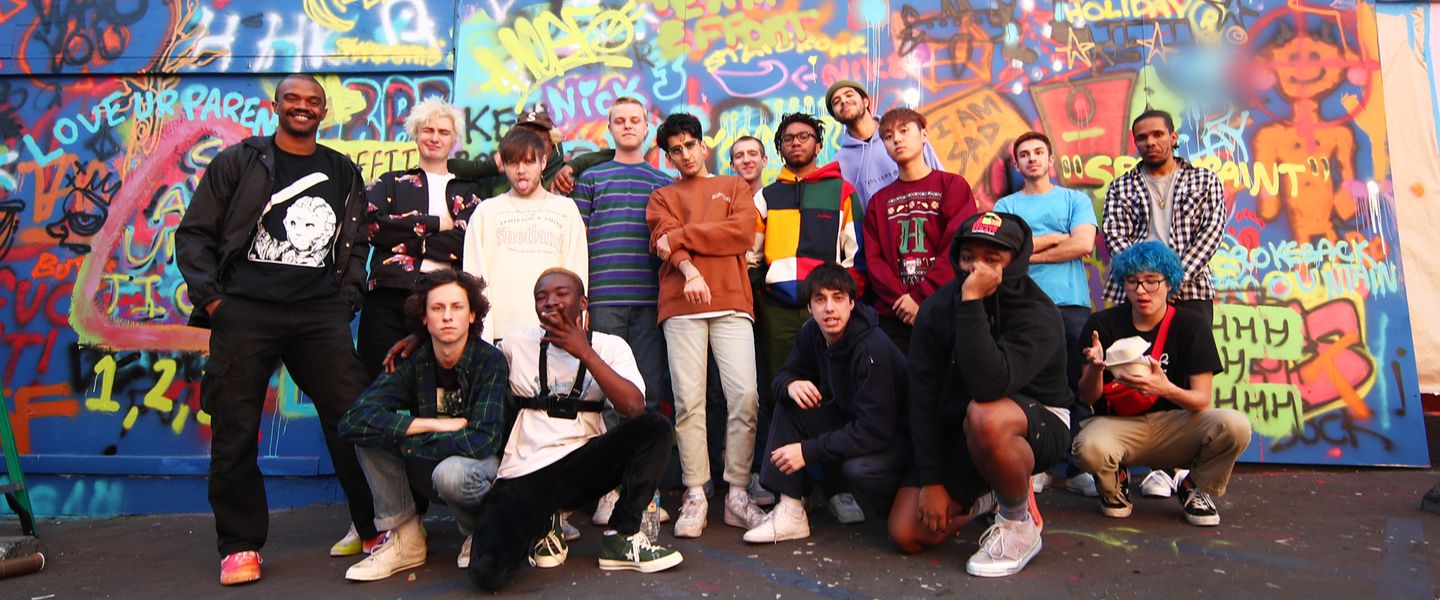
Brockhampton is the biggest band you’ve never heard of and brain child of Kevin Abstract, the lead vocalist and founding member. In the vocal line up there is Kevin, Matt Champion, Merlyn Wood, Dom McLennon, JOBA, and bearface. Romil Hemnani and Q3 (Jabari Manwa and Kiko Merley) make up their production team and are occasionally on tracks. Henock “HK” Sileshi is the graphic designer and does creative direction with Kevin. Robert “Roberto” Ontenient is the web designer and does the skit vocals in Spanish for a number of songs in recent albums, Jon Nunes is the manager, and Ashlan Grey, the photographer. Phew, what a mouthful.
That’s a lot to remember, I know, but it’s important considering they are each a member of the band. And when you consider what that means for the future of boy bands, it’s worth keeping up with.
Traditionally, boy band is a bad word. Boy bands were for little girls to scream and dream about and young women to lose their minds over. Boy bands were manuafacted by labels to sell, sell, sell to the “teenybopper” subgroup of young teens. Boy bands were meant to be undercut by adults and men, dismissed because of their young, female fanbases. But what happens when the boy band, the boyband, declares themselves a boyband? Well, first of all, it no longer becomes a weapon of dismissal.
Secondly, it forces us to reconsider what it means to be a boy band.
Brockhampton began their journey in 2015 and fall into the alternative hip-hop/R&B genre, much unlike boy bands from the early 90s and 2000s. They don’t market themselves to young girls with sappy and superficial lyrics, but are story tellers, singing and rapping about their experiences as gay men, as men of color, and as men with mental illnesses. And they don’t tolerate sex scandels.
That’s not to say they don’t have things in common with classic boy bands. Each vocalist has certain trope they seem to be assigned (the little brother, the goofball, the strong and silent, etc.), and fans do have favorites. But the main difference between Brockhampton and boy bands like ‘N Sync and the Beastie Boys is that they aren’t explicitly targeting young girls with their music. There is no special grooming the members go through or a catering to young female audiences, no adoring looks into the camera or sappy lyrics on young love. They aren’t trying to create an illusion of singing to the audience, but are singing for them. Brockhampton shares their experiences of coming out, loving men, growing up with mental illness, growing up as a minority and being told they weren’t going to make it, and the reason fans fall in love with the music is because they can connect with those stories in a personal level. They’re relatable, real, and ultimately groudbreaking, and being a boyband will not take that away from them.

 genderracemedia
I LOVED this introduction. I loved that you created a vision and predetermined idea of who/what a boy band is. This was really interesting not only for me to remember boy bands, but to create my own thoughts regarding modern boy bands and teenybopper music. I found it really interesting that you mentioned the number of members, something that I was taken back on when I was introduced to the group Brockhampton. 13 members, diverse in race, ethnicity, sexuality and group attribution is something really special. I think that this group is the future of boy bands not only because of the fan base they have attracted but also because of the image they hold. They are much different in terms of the appearance of the “original” and “classic” boy bands and I think that says a lot for the generation of today’s age. Change is happening everywhere, and music seems to be under another generational age of raw lyrical genius based on today’s struggles.
LikeLike
I love the beginning of your article because the questions bring to light very real concerns about boy bands. It was very engaging and it drew me into the article. It made me want to know more. I really liked how your article felt like a conversation. It felt like you were actually talking to me in person. I liked the article but just be mindful of run-on sentences. A few of the sentences were run-on sentences and sometimes the purpose of the article can be lost in the run-on sentence.
LikeLike